
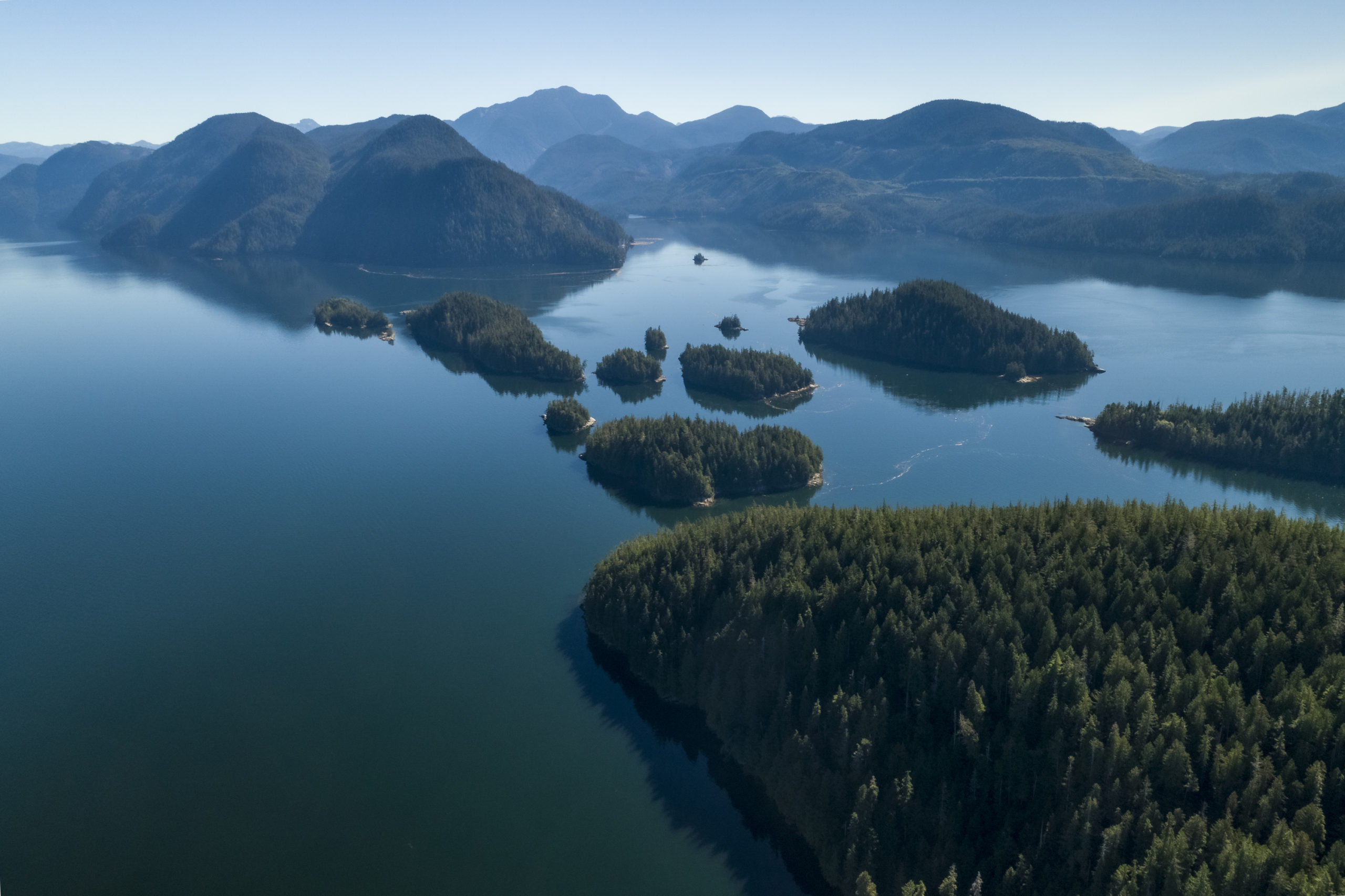
In the waters of British Columbia, just off the northern end of Vancouver Island in Johnstone Strait, lies a very special place, a protected area for whales known as Robson Bight (Michael Bigg) Ecological Reserve. Here, the whales find sanctuary—food, shelter, and community.
From June to October, killer whales are seen in Robson Bight so regularly that pioneering orca researchers like the late Dr. Michael Bigg first named these salmon-eating killer whales “residents,” because they were seen so reliably in Johnstone Strait. In this safe haven, the whales behave differently than they do in the surrounding waters—we observe less traveling, and instead we see more resting, more playing, and more rubbing on smooth pebble beaches. Beach-rubbing behavior is so unusual that we now consider it a cultural trait that defines northern resident killer whales.
We are proud to launch Sanctuary
In our film series, Sanctuary, we tell the story of Robson Bight (Michael Bigg) Ecological Reserve, the world’s first killer whale sanctuary. Importantly, this sanctuary was not imposed by governments. On the contrary, a remarkable community came together to protect the area.
Sanctuary — The Original Heros | Video 1
You will hear about the five original heroes behind the creation of Robson Bight. In the early 1980s, calling themselves the Robson Bight Preservation Committee, these heroes went to the public—school groups, community groups, and the media—to explain that the killer whales needed protection. They succeeded, and in 1982, Robson Bight became the first ecological reserve on the planet designated for orcas. We are honored to share some of the late Robin Morton’s pioneering underwater footage of orcas rubbing on the beaches of Robson Bight.
Sanctuary — Protecting the Whales | Video 2
For this video, we interviewed several of the changemakers—tourism operators, fishers, scientists, and First Nations—involved in the protection of the Tsitika Valley and who protect Robson Bight to this day.
Sanctuary — Hope for the Future | Video 3
We find this community-led creation of a sanctuary for northern resident killer whales an inspiration. We want to use Robson Bight as a powerful model of community stewardship that can inspire our Salish Sea community to provide sanctuary to help the whales hunt salmon undisturbed. Sanctuaries are a powerful tool to protect the critically endangered southern resident killer whales from extinction.
Oceans Initiative thanks our funding partner, Fulbright Canada. The Fulbright Canada-Maple Leaf Foundation Eco-Leadership Program provides small grants to current grantees and alumni of Fulbright Canada programs to partner with local organizations in their communities in order to make a significant and positive impact in their community.
Get Updates
Sign up for our newsletter and learn how you can help us protect critical feeding areas for southern resident killer whales.